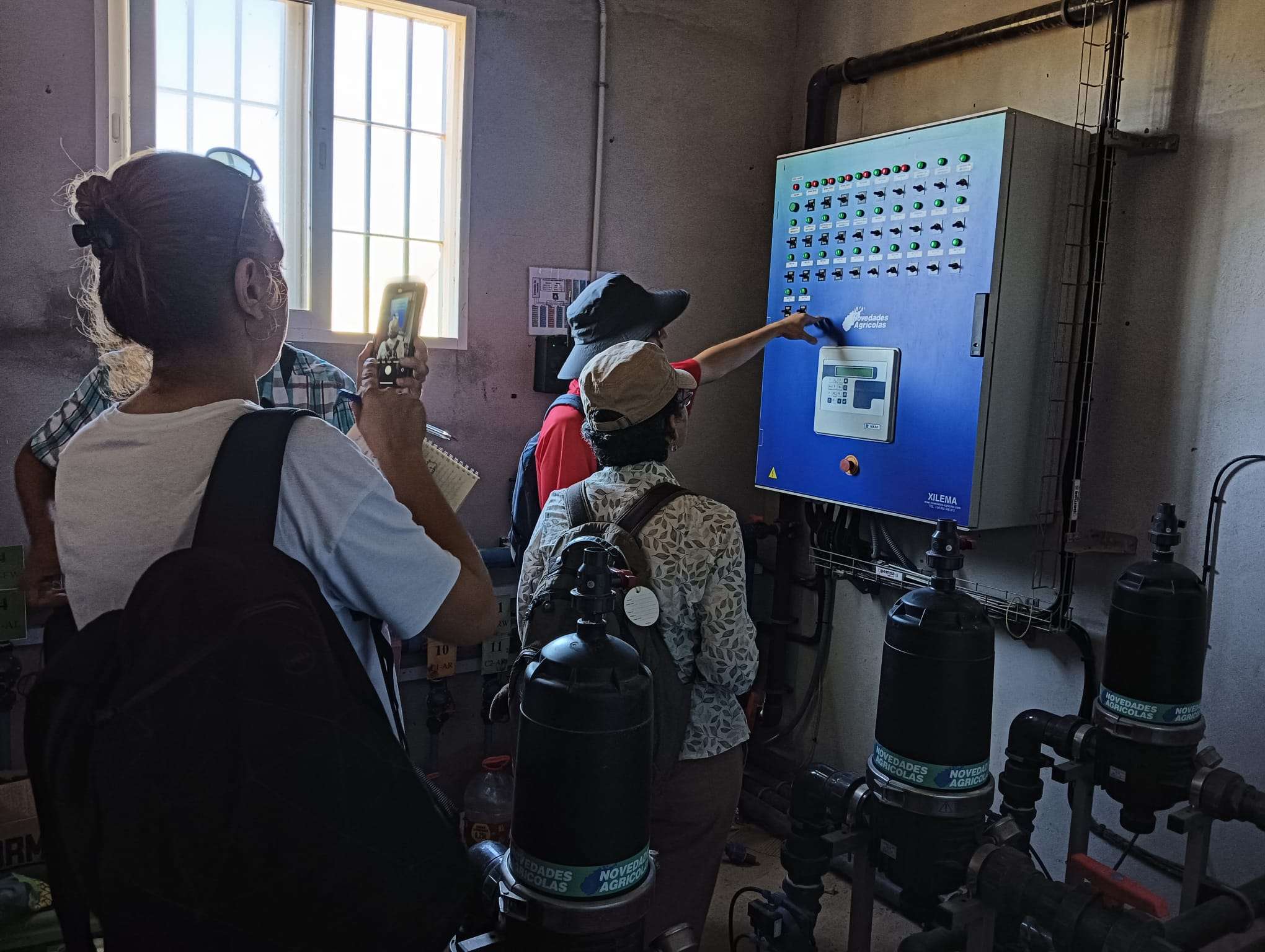
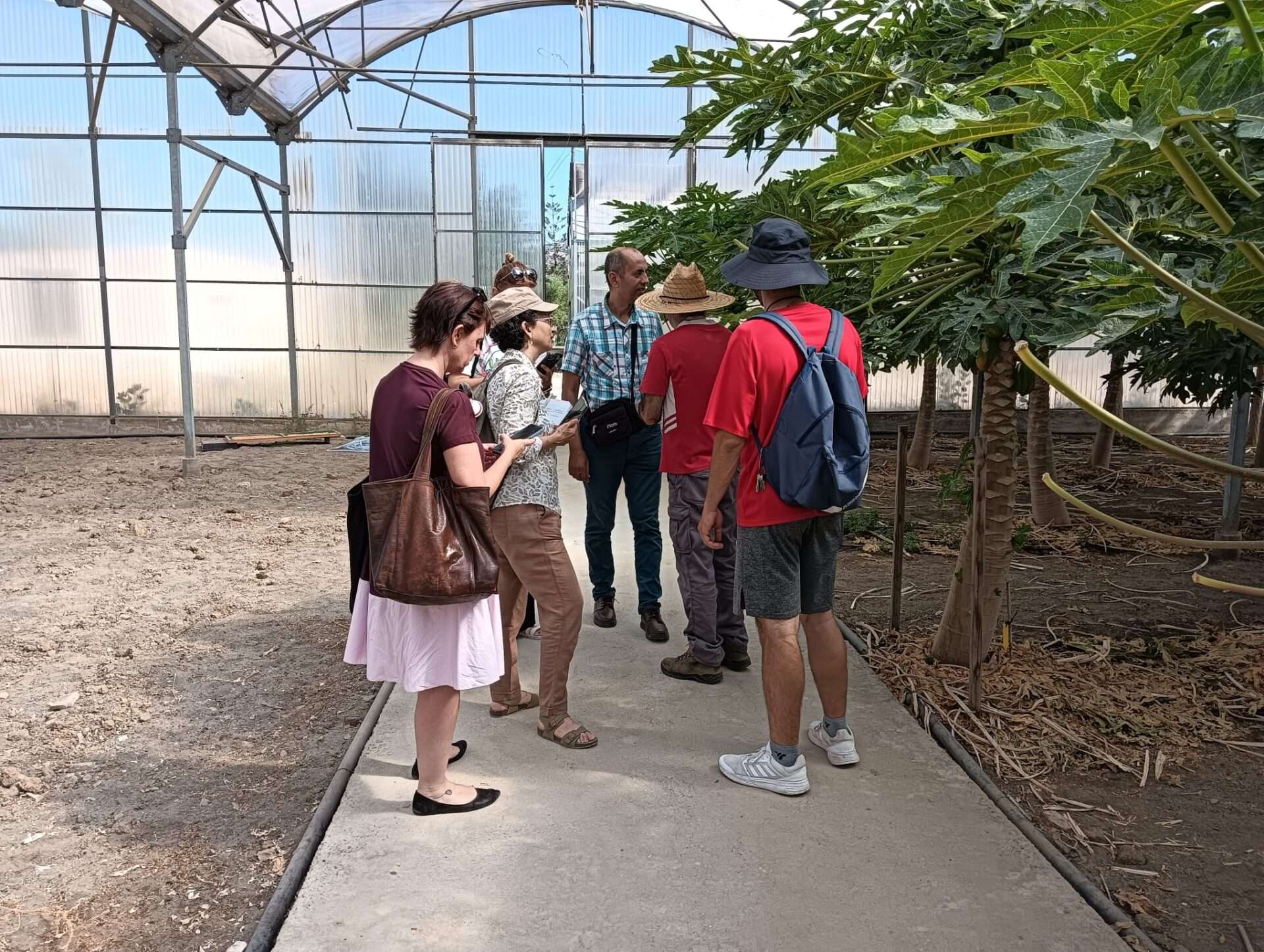
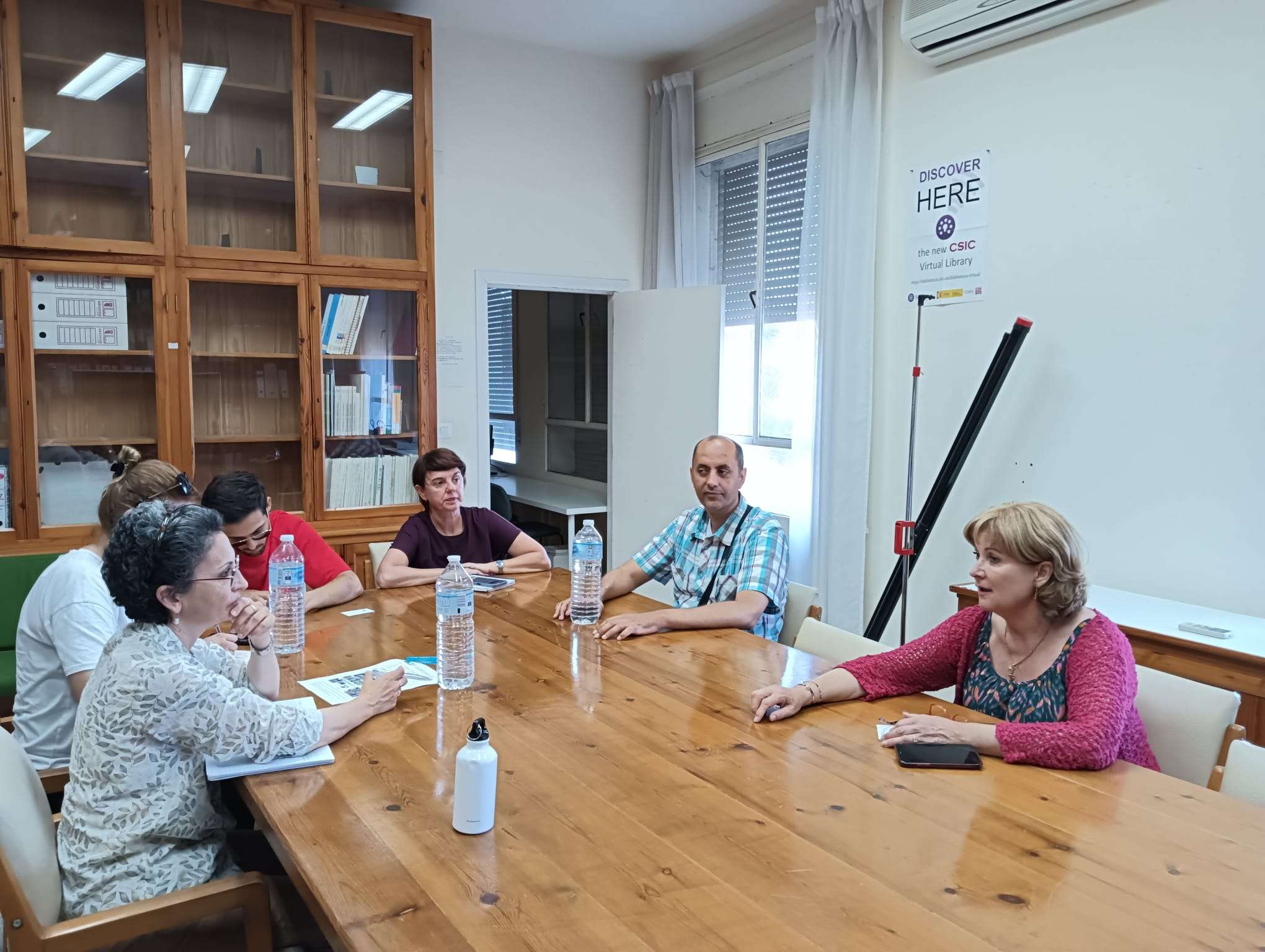
One of the advantages of working on projects is undoubtedly the opportunity to collaborate with people from different countries and cultures. This is particularly true for projects funded by the PRIMA foundation, which promotes cooperation among Mediterranean countries. In the BONEX project, we have the privilege of collaborating with countries such as Italy, Portugal, Lebanon, Jordan, Morocco, and Tunisia. It was in this last country where we had a very fruitful exchange of experiences during July. After Rafael Casielles’ visit to Tunisia in February to see the facilities for using reclaimed water for irrigation in the north of the country, it was now the turn of our Maghreb colleagues from the National Institute of Rural Engineering, Water, and Forest Research (INRGREF, by its French acronym).
From July 3 to 5, the INRGREF researchers visited the experimental plot coordinated by BIOAZUL and toured the Axarquía region to see different practical experiences on the use of reclaimed water in agriculture. On the first day, we visited the experimental site lotaced in Axarquia region (Malaga, Spain). This is a Living Lab where several research and innovation projects converge. The INRGREF researchers were able to see firsthand the preliminary results of the BONEX project, where we developed a decision tool for farmers to calculate the optimal amount of fertilizers when using reclaimed water; the advances of the P2GREEN project, where the nutrient management tool with NPK soil sensors is being applied for an automated solution with trials in avocado and mango; and the Axarquía Sustainable operational group, where studies extend to other crops such as pitaya and passion fruit.

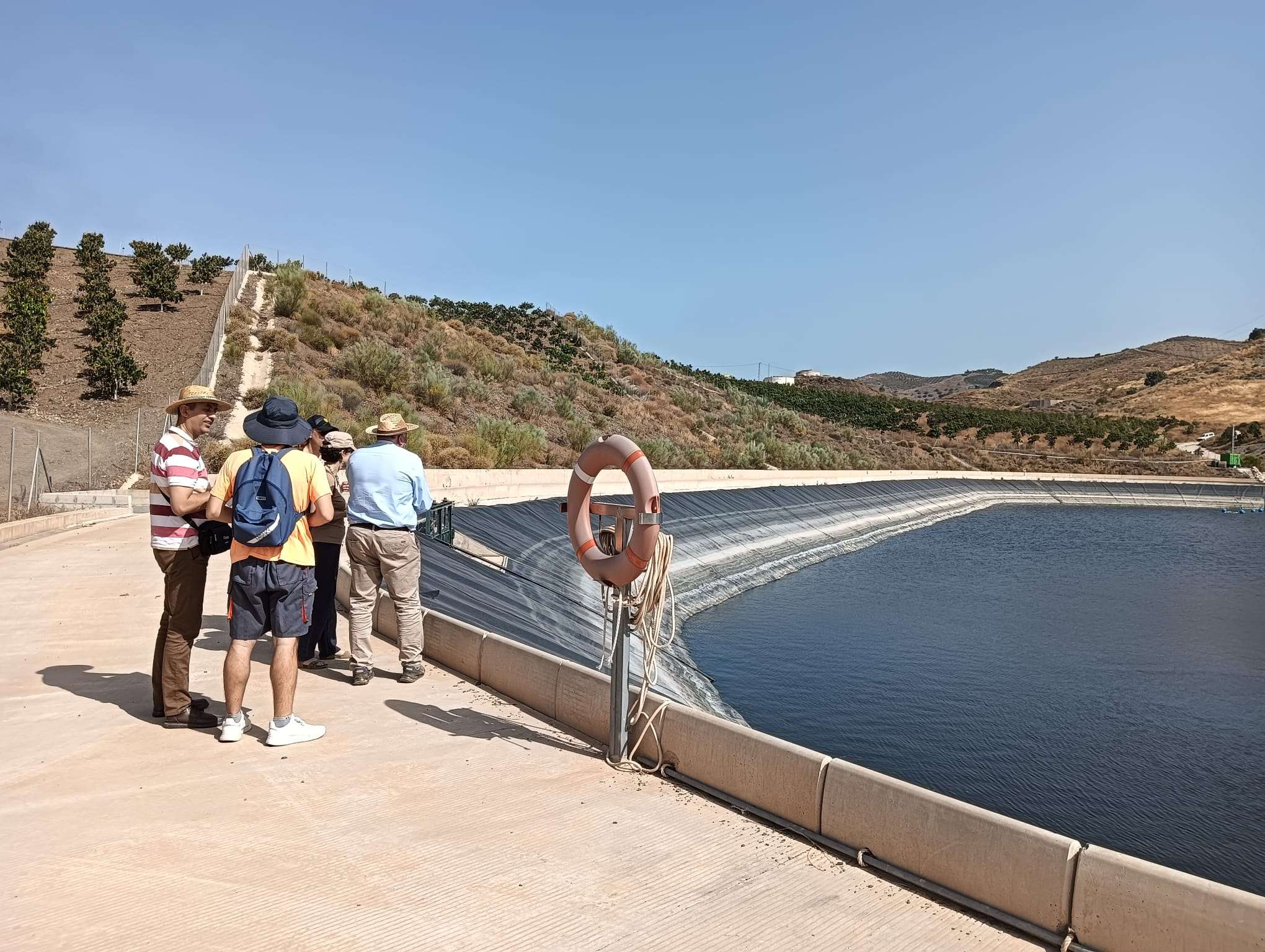
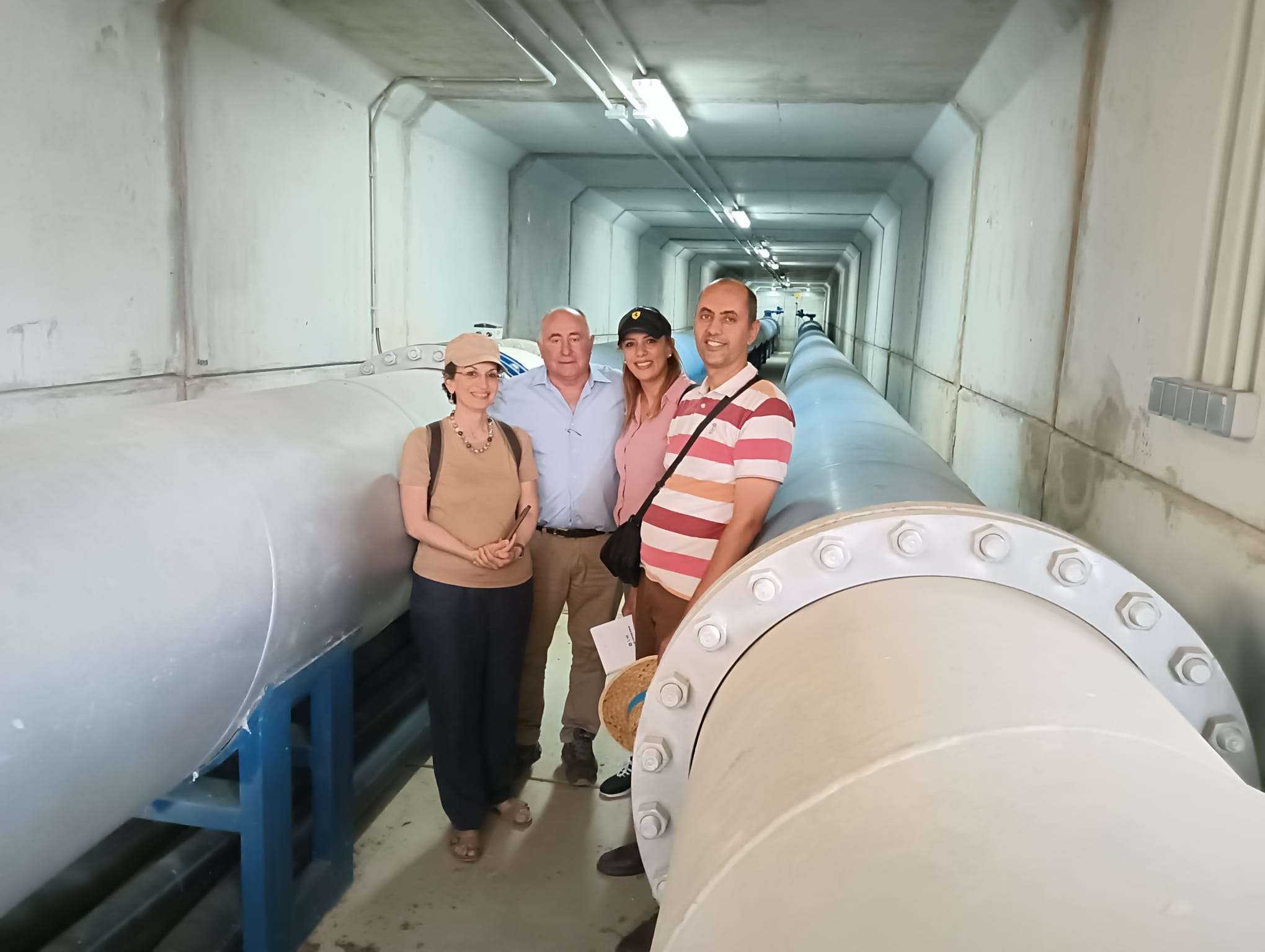
The INRGREF researchers were also able to meet the main stakeholders of the region and learn about the challenges faced by Axarquía farmers in combating the worst drought crisis in decades. The farmers from the Algarrobo irrigation community allowed us to see the tertiary treatment with which they hope to increase the amount of water resources for irrigation, thus alleviating the problems of water scarcity. We had extensive discussions about the salinity problems faced by using reclaimed water in crops that are very sensitive to high conductivities, such as avocado and mango. On the other hand, the visit to the IHSM La Mayora experimental station allowed us to present the first projects carried out with reclaimed water in the area in collaboration with BIOAZUL. We were also able to see studies to adapt different subtropical crop species to the climatic conditions of La Axarquía. Finally, we had the opportunity to visit the Guaro Sur irrigation community and see the impressive hydraulic infrastructure works carried out by the irrigators to optimize water use and ensure that farmers receive water supply in the best conditions. It was very interesting to see how these facilities have been adapted to the use of reclaimed water they receive since autumn 2022, practically the same time they have been without water from what had been their main supply source, La Viñuela reservoir. We discussed the relief it means for the irrigators to receive water from La Viñuela again during this summer as an emergency measure, but which is still insufficient after the scarce rains of recent years.
This visit was not only an exchange of technical knowledge but also an opportunity to strengthen ties between researchers and farmers from different countries, thus fostering closer and more effective collaboration. The learnings and experiences shared during these days are essential to facing common challenges related to the sustainable use of water resources in agriculture. Additionally, the integration of new technologies and innovative practices reinforces our commitment to developing sustainable and efficient solutions for water management, thereby contributing to the well-being of agricultural communities in the Mediterranean region.