Ouardanine has undergone a critical situation of water shortage faced by the farmers in June-July caused by a bacterial outbreak that affected the quality of the reclaimed water. This contamination of the irrigation water resulted in the interruption of the irrigation water supply for more than a month threatening the crops production. This incident highlights the importance of water quality monitoring to guarantee its subsequent availability to farmers; when the quality does not comply with the standards, the quantity cannot be guaranteed.
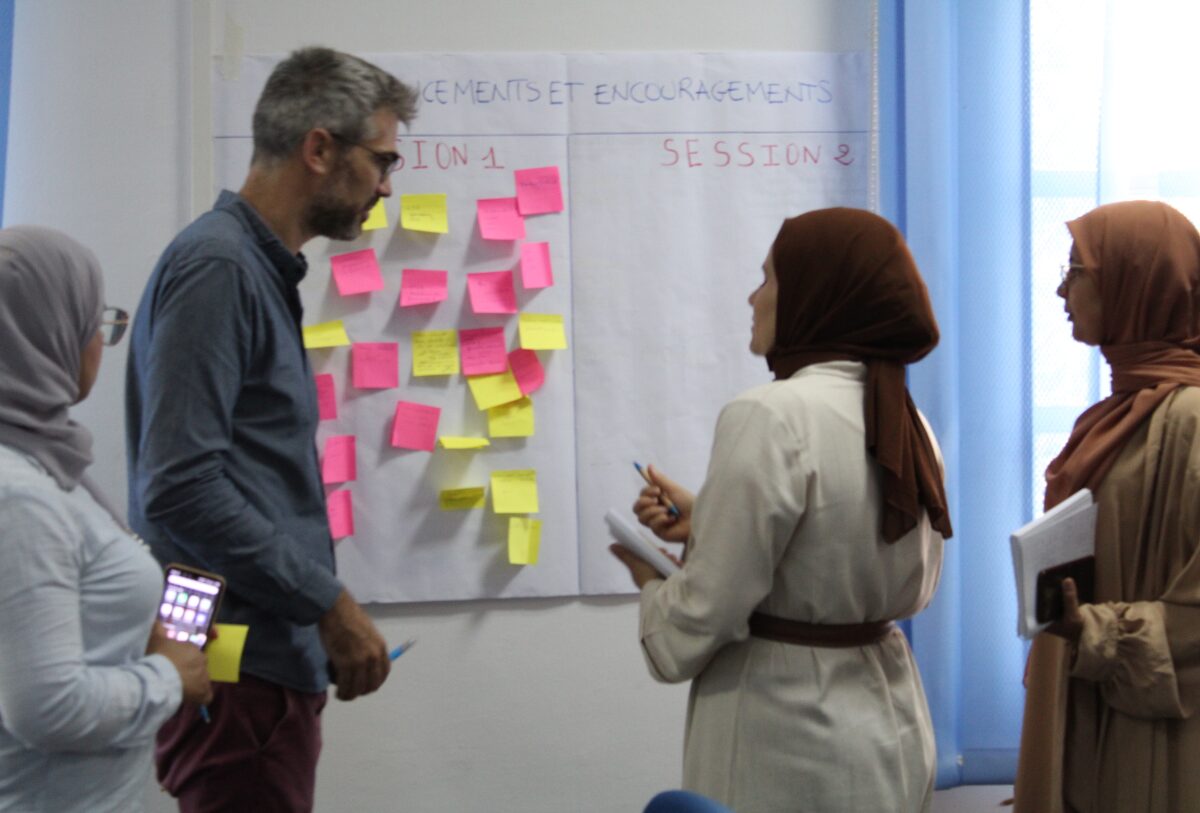
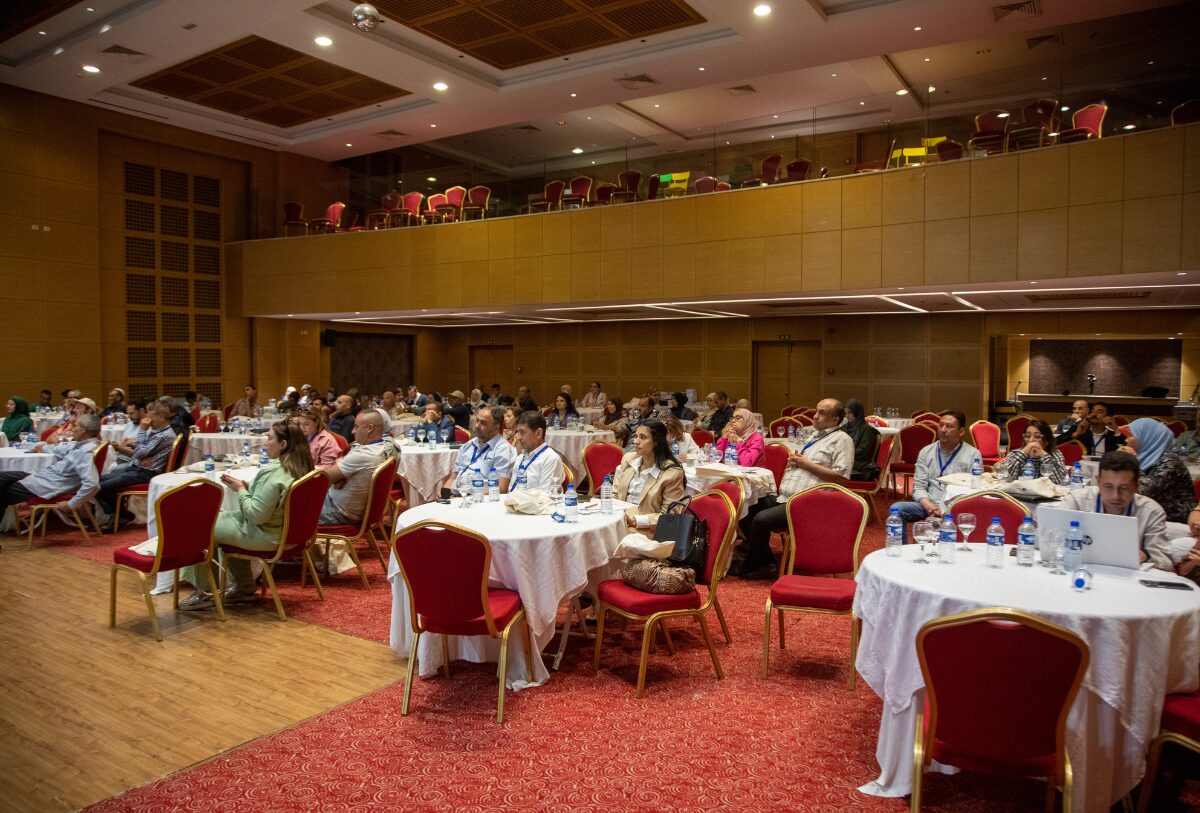
This event has affected the organization of the policy workshop. Hence, the 4th workshop dedicated to policy titled “ Toward the Adoption of the WEFE Nexus Innovations for an Efficient Water Reuse in Agriculture “ was composed of two separate sessions: a first one organized on 22 May in Monastir and a second one organized on 3rd July in Tunis. The 1st and the 2nd sessions gathered 13 and 10 organizations and institutions, respectively. In total, 97 participants contributed to the 1st workshop session with 37% of women while 36 have participated in the second session with 61% of women. Participants were mainly regional and local for the 1st session and regional and national for the 2nd session.
The first session has invited 2 keynote speakers: an expert in water resources and climate change, Mr. A. Ouasli, and the representative of FAO in Tunisia, Dr. S. Yakoubi. The 1st speaker highlighted the importance of the implementation of the WEFE Nexus approach under water scarcity and drought conditions in Tunisia. The second has covered the FAO vision of the WEFE Nexus and focused on the initiative undertaken within the Inter-Regional Technical Platform on Water Scarcity (IRTP-WS) launched in 2022 aiming to manage climate change and WEFE Nexus dynamic water scarcity. This FAO initiative is gathering experts and stakeholders to exchange information and solutions within the region for integrating various solutions under the WEFE Nexus. The second part of the workshop was dedicated to BONEX research team for the presentation of the main project results comprising 4 presentations covering: i) the management of the reclaimed water quantity, ii) the management of the reclaimed water quality, iii) the socio-economic aspects, and iv) gender and capacity building.
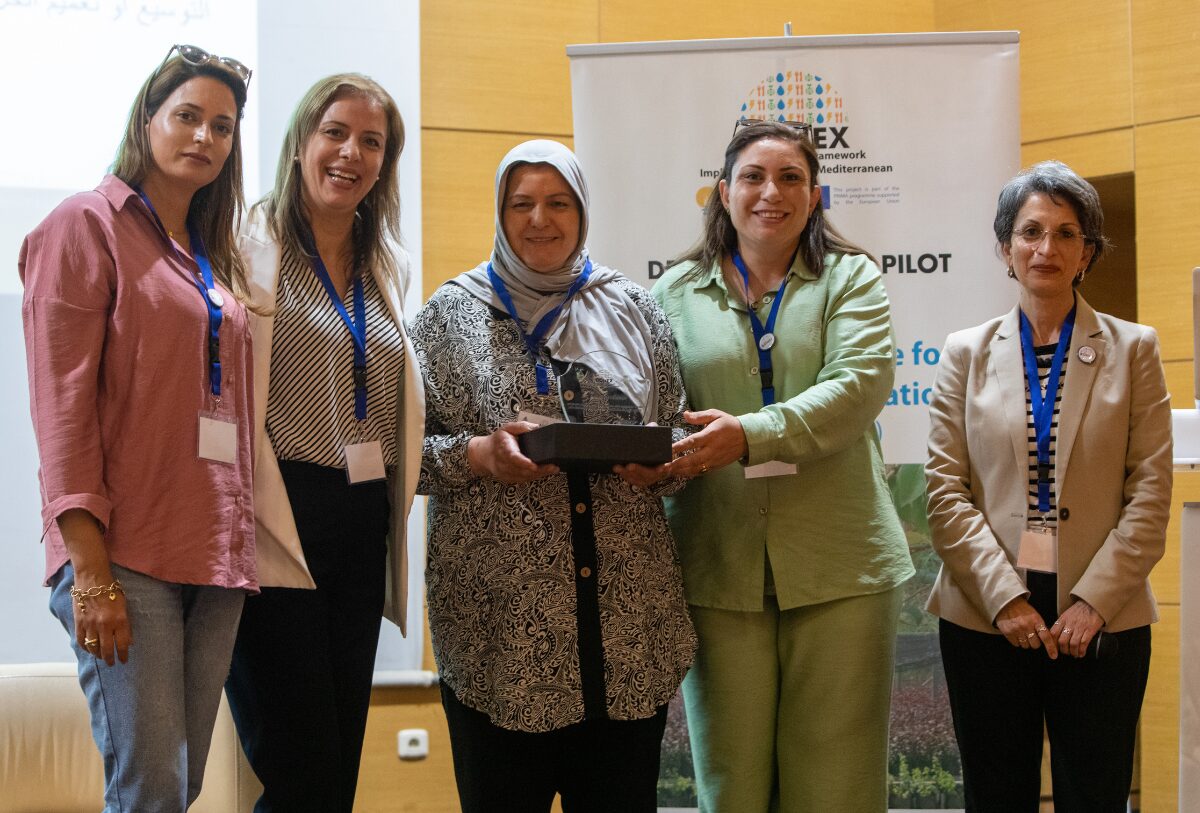
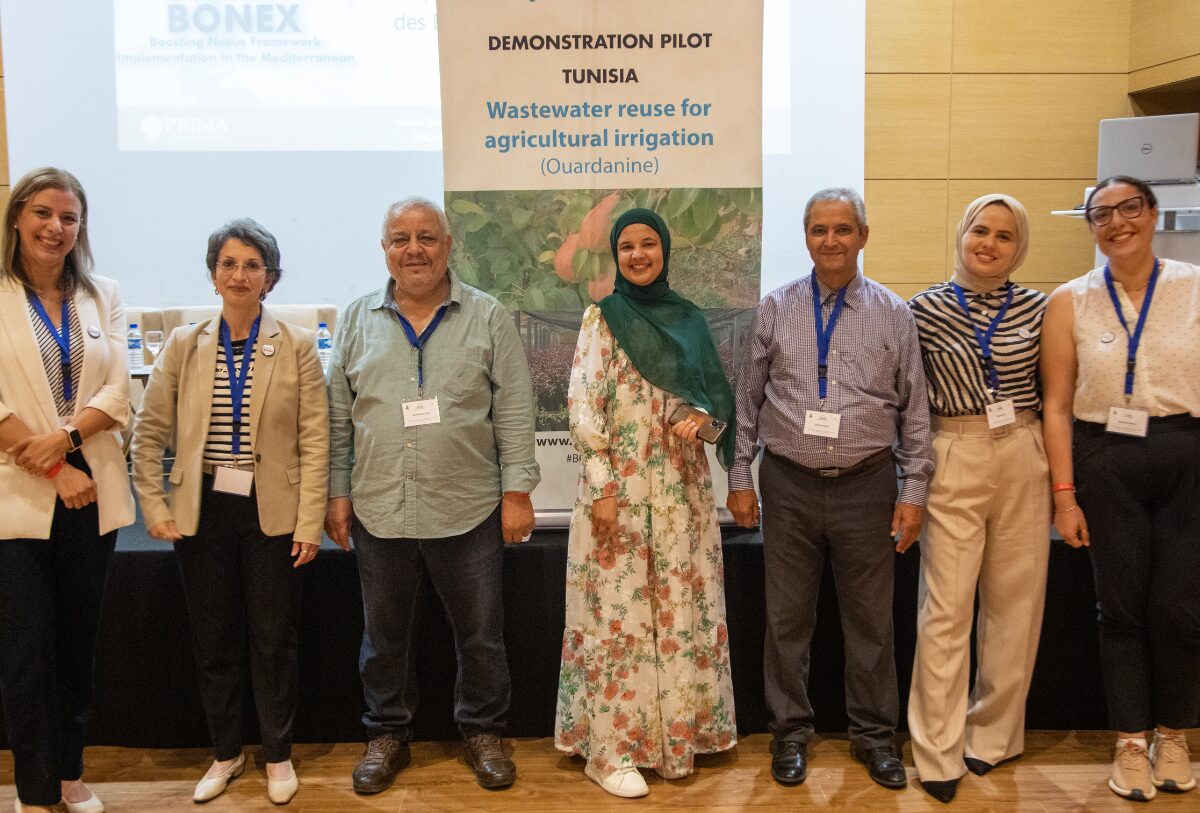
The second session of the workshop was held on 3rd July. This participatory session included 2 rounds to deal successively with reclaimed water management from the quantitative and qualitative point of views hence covering the innovative tools brought by BONEX. Each round covered 4 topics: 1. Resources management; 2. Regulatory and institutional frameworks; 3. Society and rural women; and 4. Finance and incentives. Participants came up with concrete outcomes for policy-makers with tangible examples for the two asked questions:
- How to support the adoption of BONEX innovations?
- Who are the policy-makers to be involved?
The discussions could be summarized in the followings 3 main recommendations for each topic:
| 1. Resources management of the WEFE Nexus | 2. Regulatory and institutional frameworks |
| – Set up a joint programme for collection and analysis of data obtained on water quality.
– Create a technical unit within the irrigated areas to support, maintain, and monitor innovation, and train staff. – Include the innovation on water quality monitoring in the feasibility studies of newly created or rehabilitated areas. |
– Set up actions to sensitize end-users on the benefits of BONEX solutions and practices for water saving.
– Set up subsidies for innovative water quality monitoring systems. – Set up new rules for investments in sustainable projects on the reuse of reclaimed water. |
| 3. Society and rural women | 4. Finance and incentives |
| – Showcase the economic benefits of using these new tools and their impacts on rural women and support their implementation.
– Develop a handy manual with simple instructions and illustrations to facilitate the use of the tools. – Set up a programme with local, regional and national structures to support women to use the BONEX tools. |
– Involve the agency for agricultural promotion of investments (APIA) offering subsidies to cover 50% and more of the investment in innovative projects for youth and rural women.
– Involve funding agencies and donors (FAO, GIZ, EU, etc.) currently supporting new projects on water reuse. – Set up joint actions to use effectively the installed probes for water quality monitoring and soil sensors. |