The WEFE framework is a conceptual and methodological framework that helps analysts and decision-makers to identify, implement, and evaluate local interventions regarding their potential to improve the WEFe performance (i.e. less water, energy or land is used, ecosystems are protected, while food production is ideally maintained). Solution approaches include local technical or organizational interventions, added by economic, political, social, or capacity building measures that facilitate and support the acceptance and adoption of interventions at the local level. Technical interventions include inter alia solar irrigation, wastewater reuse, or energy-exporting solar greenhouses. Organizational interventions include nature-based solution, payment for ecosystem services, or command-and-control measures.
A framework helps analysts to organize and identify the most general set of variables or elements and their relationships, and includes methods that are suitable to analyze respective variables. The overarching aim of the BONEX framework is to evaluate trade-offs and synergies of resource uses, and develop potential solution approaches. We thereby aim to answer the following overarching research questions: Across the Mediterranean, in a particular WEFe setting:
- What are the best local organizational and/ or technical interventions to improve WEFe performance, i.e., to reduce trade-offs, and improve synergies of the nexus?
- How can these interventions be embedded into an overall solution approach to facilitate their implementation in a particular social-ecological context?
Conceptually, the WEFe framework follows a multi-scalar social-ecological-technological systems approach addressing the interlinked nature of human and natural systems, and builds on systems thinking. Systems thinking is a tool to strengthen holistic thinking to address complex societal issues. Furthermore, we follow a transdisciplinary approach within the project and conduct three workshops across 7 Demonstration Projects (DP). These workshops combine the co-creation and assessment of WEFE solutions with the testing and refinement of the WEFE Framework. Based on the experiences within the different DPs, the framework is thus further developed.
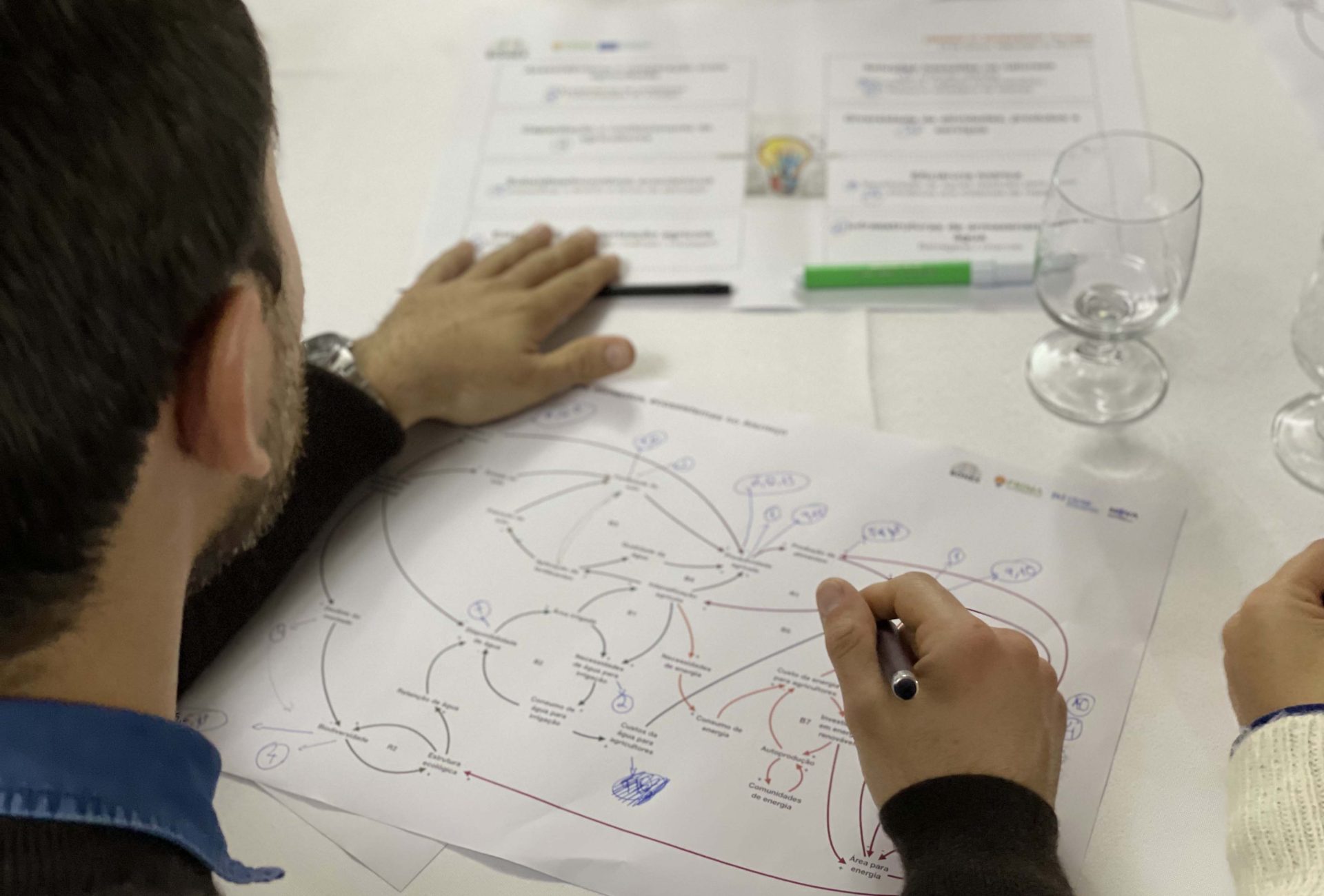
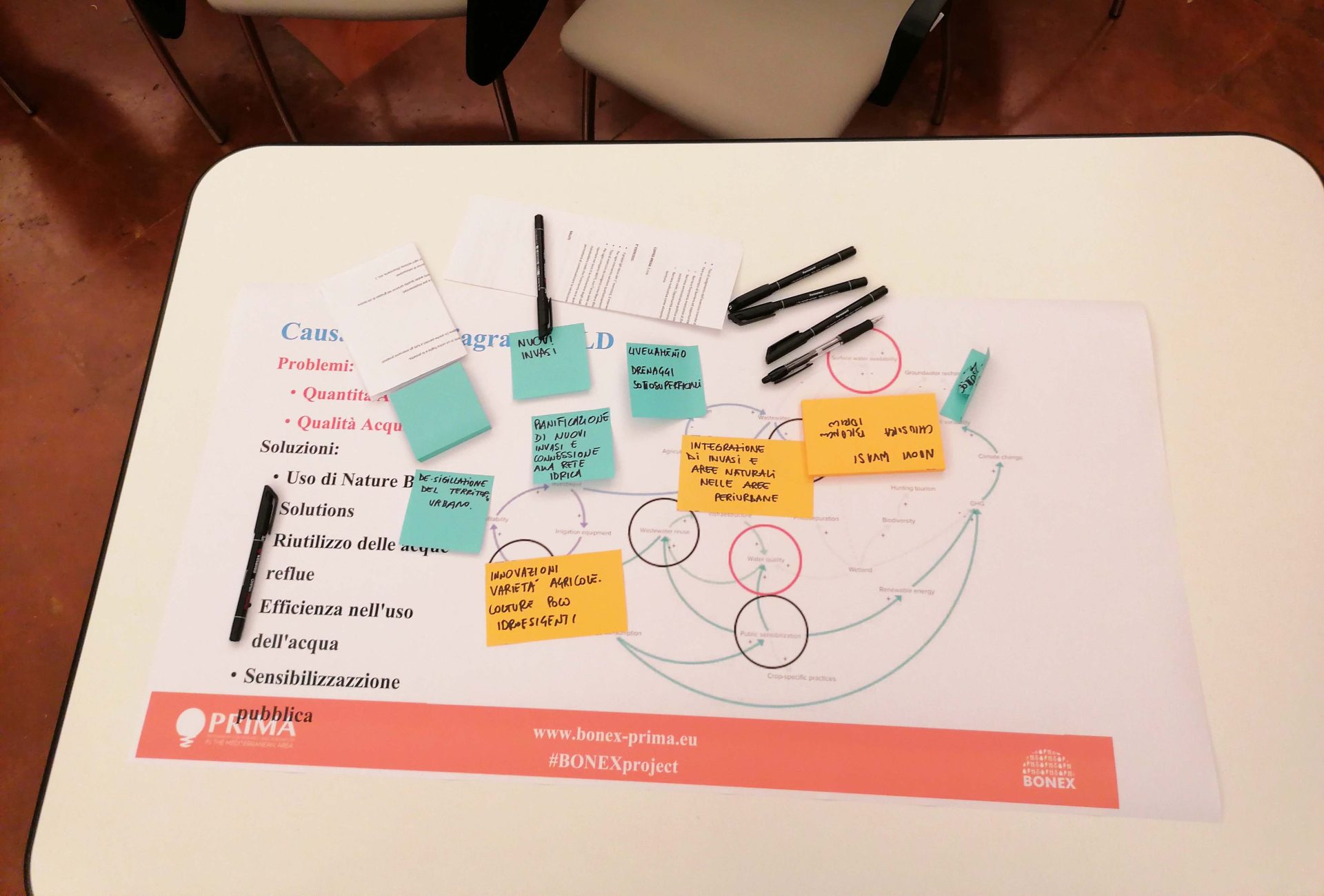
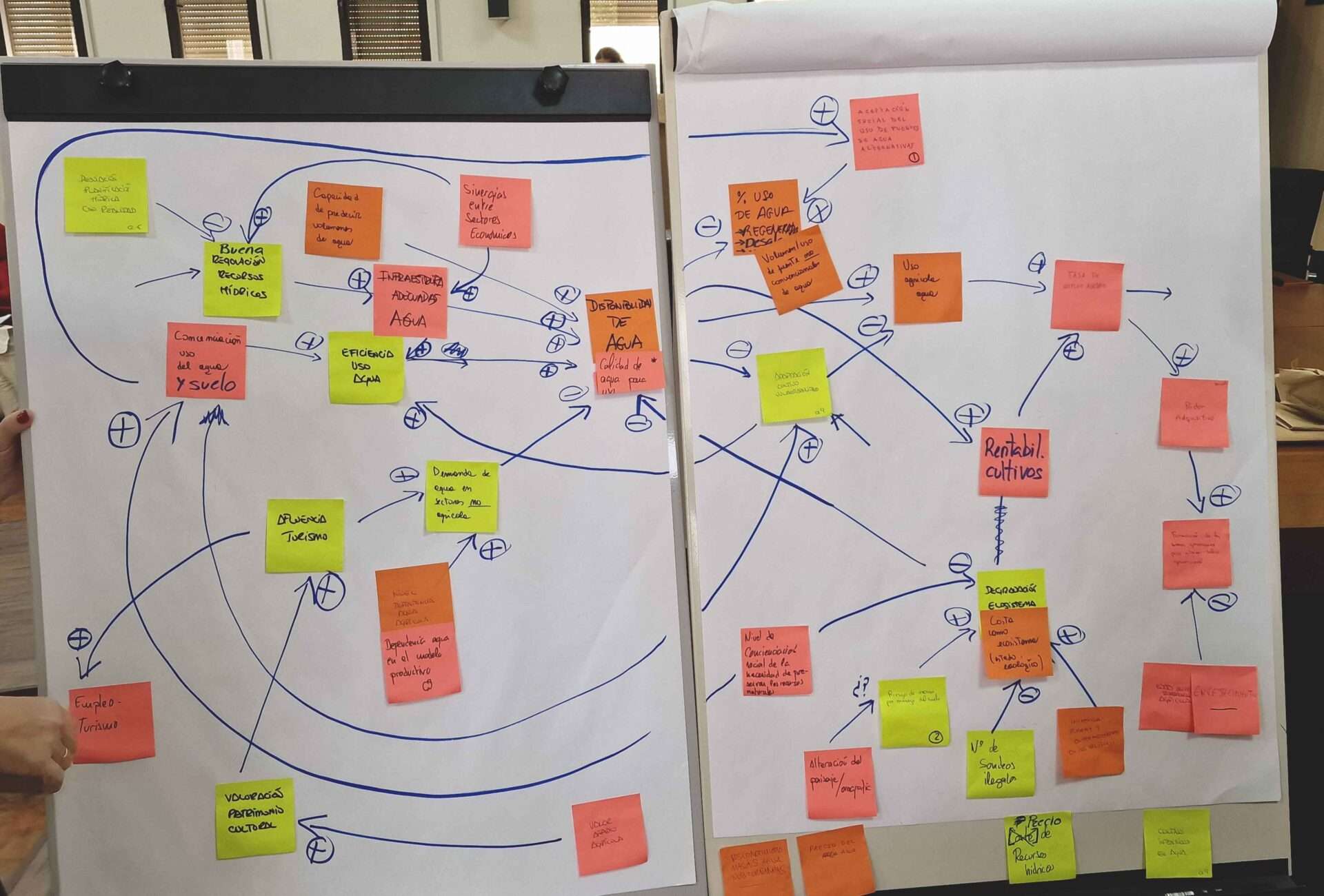
More specifically, the aim of the first stakeholder workshop was to understand the context of the WEFE Nexus in each DP, arrive at a shared problem statement together with stakeholders and identify its main causes and consequences. To do so, stakeholders developed a first version of a Causal Loop Diagram (CLD). A CLD is a tool to visualize the dynamic and interconnected relations within a system, and to describe the main interlinkages and feedback structure underlying the WEFE Nexus problem. In the second stakeholder workshop, stakeholders were asked to identify possible interventions and co-create WEFE solution approaches. The selected interventions were assessed in terms of the most important barriers and facilitating factors, as well as their perceived impacts on ecosystem services. In the third stakeholder workshop, implementation pathways will be discussed.